
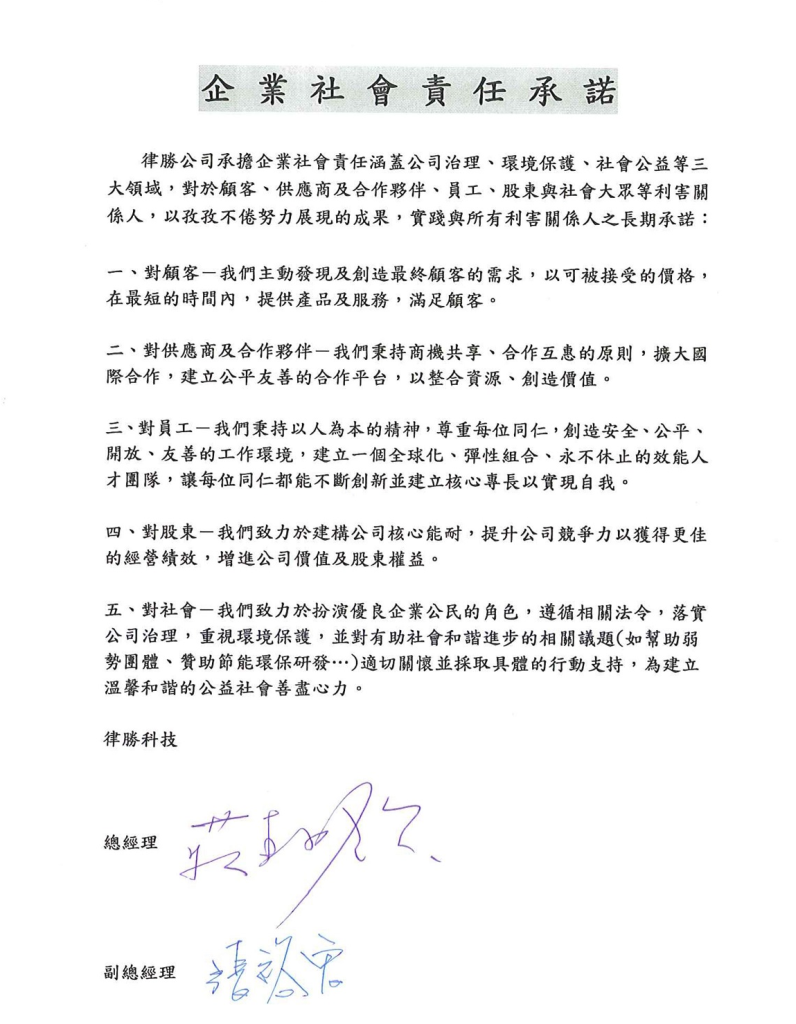
Organization and Implementation of Corporate Social Responsibility:
Microcosm’s Corporate Social Responsibility (CSR) initiatives are handled part-time by the Administration Department. In 2020, the company established a Corporate Social Responsibility Working Group, composed of cross-departmental members from various units, responsible for implementing CSR-related activities. In the same year, the company formulated the “Corporate Social Responsibility Best Practice Principles,” which were approved by the Board of Directors before being implemented. In 2021, the principles were renamed the “Sustainable Development Best Practice Principles.” The company reported the progress of its sustainable development initiatives to the Board of Directors on March 3, 2023.
In addition, the Microcosm Technology Public Welfare Trust has been cooperating with elementary schools, junior high schools, senior high schools, and vocational high schools in the Tainan area since 2005. It provides scholarships, funding for activities, and other forms of support to help promote and enhance national education.
Achievements of Sustainable Development (ESG) Implementation in 2023:
The following are the special activity programs organized by schools supported by the Microcosm Technology Public Welfare Trust in 2023. A total of 413 individuals benefited from these programs.
- Training for sports teams and arts groups, as well as participation in school team competitions
- Model-sharing sessions (role model experience sharing)
- Character education
- Legal awareness and rule-of-law education campaigns
- Diverse educational programs
- Special feature activities
- School club activities
We Continue to Make Efforts to Protect Environment
1. Microcosm has established an appropriate environmental management system based on the characteristics of its industry.
-
Established procedures for the management of environmentally restricted and prohibited substances, and has formed a dedicated team that regularly monitors and analyzes the operating environment and production processes. The company is committed to developing HSF (Hazardous Substance Free) green practices to enhance environmental protection. It has also obtained the IECQ QC 080000 certification.
-
Formulated management procedures such as the “Waste Disposal Operation Management Procedure” and the “Hazardous Substance Classification and Labeling Guidance Procedure.”
-
Complies with environmental protection laws and regulations. Both general waste and industrial waste are entrusted to qualified and legally certified contractors for collection and disposal, with formal service agreements in place to support waste classification, recycling, and resource reuse.
-
Dedicated to the research and development of green products, improving automated production efficiency, and maximizing the effective use of recycled resources.
2. Use of recycled materials with low environmental impact
Since its establishment, Microcosm has adhered to the philosophy of placing equal importance on corporate development and environmental protection. The company is committed to developing halogen-free FCCL products and effectively measuring and monitoring environmentally hazardous restricted substances.
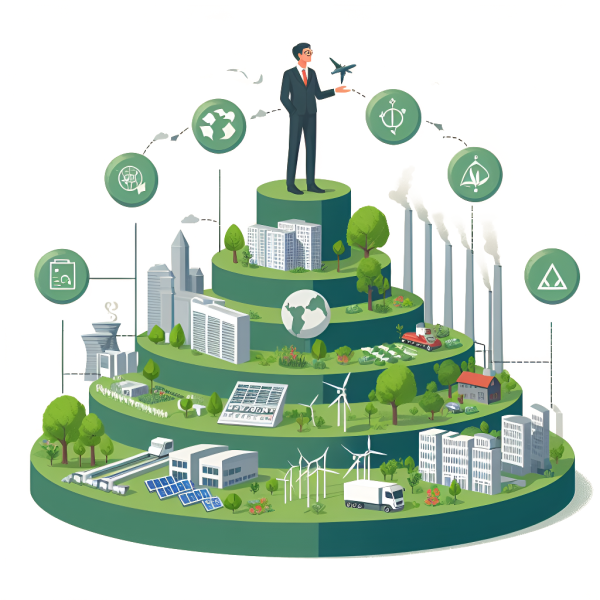
3. Assess potential risks and opportunities of climate change to the company and adopt appropriate response measures.
The company operates in the electronic components manufacturing industry, specializing in the production and sales of printed circuit board materials and thin-film flexible copper-clad laminates (FCCL). The manufacturing process primarily consumes energy such as electricity and natural gas.
The company fully recognizes that climate change may affect its business operations and lead to increasing energy and environmental protection costs. Therefore, the company continues to implement energy-saving and carbon-reduction measures, promote the reuse of waste resources, and develop and promote more environmentally friendly products.
Energy Conservation and Carbon Reduction Measurements
1. Energy Management
(1) Electricity Saving Management
Since 2015, the company has implemented an energy management program. The electricity consumption and average energy savings over the past three years are shown in the table below:
| Year | 110 | 111 | 112 |
|---|---|---|---|
| Annual Electricity Consumption (kWh) | 3,832,052 | 4,054,577 | 3,640,380 |
| Annual Energy Saving Rate (%) | 3.46 | 3.08 | 3.42 |
(2) 2022 Annual Electricity Savings Summary
| Year | Measures | Energy Savings (kWh) |
|---|---|---|
| 111 | Added and replaced air handling unit (AHU) inverters | 128,736 |
| 110 | Installed AHU inverters | 128,73 |
| 109 | Replaced mercury ceiling lights with LED ceiling lights throughout the plant | 8,640 |
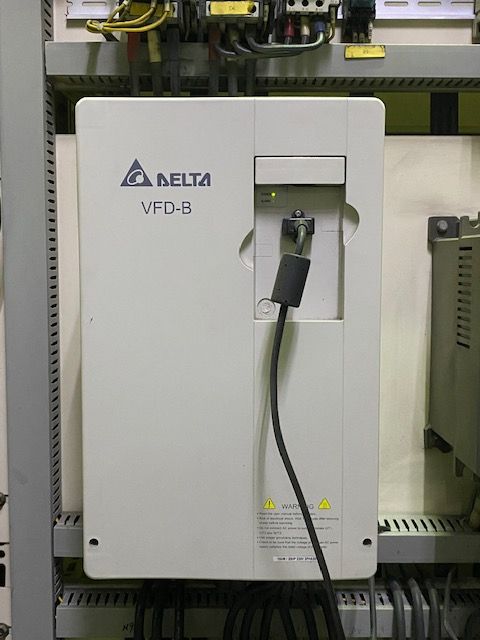
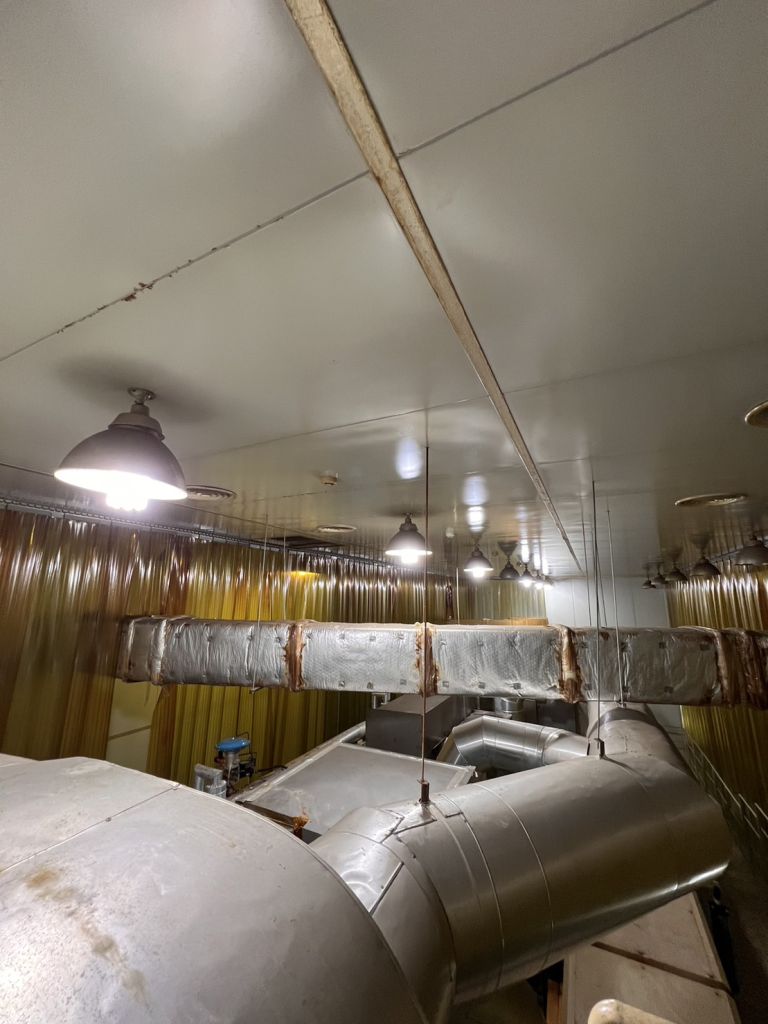
- Measure: Phase 1 Cleanroom B Coating Machine Air Handling Unit (AHU)
- Target Equipment: Utility AHU – Model: Tianji 167212 kcal/hr – Quantity: 1 unit (AHU)
- Implementation Details: The existing faulty inverter was replaced with a new one. After replacement, the fan speed was reduced by 50% to lower electricity consumption.
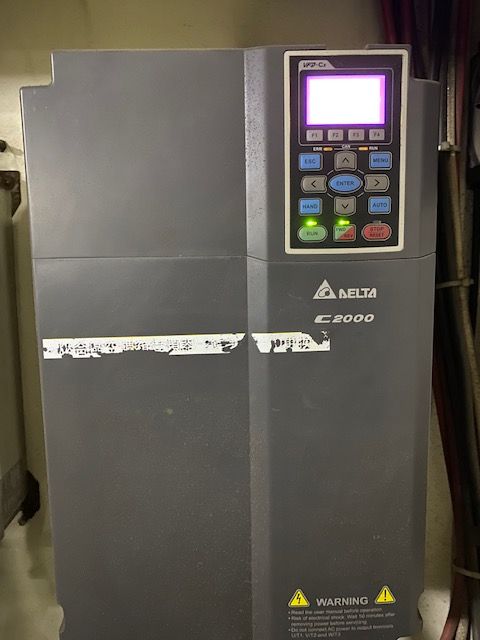
- Measure: Phase 2 Air Conditioning Area
- Target Equipment: Air handling units (AHUs)
- Implementation Details: Inverters were installed on the AHUs. By reducing the full output of the air handling units by half, energy savings were achieved.
- Measure: Entire Phase 1 & Phase 2 Plant Areas
- Target Equipment: All ceiling lights above manufacturing equipment
- Implementation Details: Replaced old 500W mercury ceiling lights with 200W LED lamps to reduce energy consumption.
2. Energy-Saving Measures for Offices
Microcosm actively promotes office energy-saving initiatives, aiming to strengthen employees’ energy conservation behaviors through education and awareness campaigns. We encourage staff to develop good energy-saving habits, thereby improving energy efficiency in the office environment. Cultivating these habits helps reduce overall energy consumption, lessen environmental impact, and support the company in achieving its long-term environmental sustainability goals.
(1) Promote Company Energy Conservation and Carbon Reduction Initiatives
Set Air Conditioning Temperature to 27°C
Turn Off Lights When Not in Use
Conserve Water
Use Personal Tableware
Promote Paperless Practices and Digital Documentation
Set Up Waste Paper Recycling Bins for Reuse
(2) Use Electronic Invoices to Support Environmental Protection and Global Sustainability
The company upholds the principles of promoting environmental protection and global sustainability, responding to worldwide energy-saving and carbon-reduction efforts, and aligning with the Ministry of Finance’s electronic invoicing policy. Accordingly, electronic invoicing has been implemented since October 2018 (Year 107).
(3) Implement Electronic Document Exchange System
By processing official documents electronically, the company reduces paper usage and implements energy-saving and carbon-reduction policies. In 2019 (Year 108), a total of 323 incoming documents were handled electronically.
(4) Energy-Saving Measures Implemented in Plants and Offices:
The company continuously improves the energy efficiency of operational equipment in both manufacturing facilities and office spaces. In line with energy reporting requirements, energy-saving policies are formulated and implemented annually, achieving an energy-saving rate of 1% per year. From 2015 to 2021 (Years 104–110), the average energy-saving rate reached 2.03%.
(5) Use of Energy-Saving and Environmentally Certified Products
LED energy-efficient lighting has been installed to improve the efficiency of the lighting system. Since 2018, a large-scale replacement of traditional lights with energy-saving LED fixtures has been carried out, successfully achieving energy and electricity savings while enhancing overall illumination.
(6) In response to the government’s renewable energy policy, the company installed solar power generation systems at the end of 2017 (Year 106), contributing to the protection of the Earth’s environment.
Energy and Waste Management Policy
1. Water Resource Management
All water used by Microcosm comes from the Taiwan Water Corporation, with no use of well water, groundwater, rainwater, or other sources.
Annual Water Consumption (Nanke Plant)
| Water Resources | Unit | Output | ||||
|---|---|---|---|---|---|---|
| 2019 | 2020 | 2021 | 2022 | 2023 | ||
| Water Consumption | m³ | 18,591 | 18,377 | 19,020 | 17,155 | 1,8000 |
2. Use of Renewable Energy
Microcosm’s commitment to environmental sustainability is reflected in its effective use of renewable energy. Through the solar panel systems installed on the rooftops of its facilities, the company efficiently converts solar energy into electricity, thereby reducing greenhouse gas emissions.
3. Pollution Prevention and Control Management
Microcosm Technology Co., Ltd. is committed to environmental protection and the efficient use of resources. Our waste management strategy aims to reduce environmental impact through continuous improvement and responsible practices. During the past fiscal year, we achieved significant progress in waste management by improving the accuracy of waste classification, strengthening waste reduction measures, and exploring sustainable waste treatment and recycling solutions.
To ensure the lawful disposal of waste and minimize environmental impact, we have implemented strict compliance inspections to verify that all waste disposal contractors are qualified and certified by the environmental authorities. In addition, hazardous industrial waste treatment contractors are audited annually to prevent environmental pollution caused by operational negligence or illegal activities by disposal vendors.
Furthermore, Microcosm has established a solvent recovery system, which helps improve energy efficiency, prevent improper resource loss and waste, and reduce the environmental impact of waste generation.
(1) Waste Management Measures
Based on data from 2019 to 2023, we have achieved positive results in controlling the generation of both hazardous and non-hazardous waste. These achievements are the result of our continuous improvements in waste classification and treatment processes, as well as close collaboration with recycling and waste treatment partners. These efforts have not only enhanced our operational efficiency but also demonstrate our strong commitment to environmental responsibility.
Total Annual Waste Weight (Nanke Plant)
| Category | Subcategory | Unit | Output | ||||
|---|---|---|---|---|---|---|---|
| 2019 | 2020 | 2021 | 2022 | 2023 | |||
| General Industrial Waste | Recycled / Reused | Metric Tons (tCO₂e) | 6.334 | 5.79 | 7.65 | 4.862 | 6.5 |
| Non-Recyclable | 47.39 | 43.905 | 27.948 | 23.738 | 33.314 | ||
| Total | 53.724 | 49.695 | 35.598 | 28.6 | 39.814 | ||
| Hazardous Industrial Waste | Recycled / Reused | Metric Tons (tCO₂e) | 0 | 0 | 0 | 0 | 0 |
| Non-Recyclable | 26.739 | 42.272 | 32.242 | 34.048 | 60.79 | ||
| Total | 26.739 | 42.272 | 32.242 | 34.048 | 60.79 | ||
| Total (General + Hazardous Waste) | Recycled / Reused | Metric Tons (tCO₂e) | 6.334 | 5.79 | 7.65 | 4.862 | 6.5 |
| Non-Recyclable | 74.129 | 86.177 | 60.19 | 57.786 | 94.104 | ||
| Total | 80.463 | 91.967 | 67.84 | 62.648 | 100.604 | ||
(2) Waste Management
The packaging materials used for production are collected and reused by suppliers, helping to reduce costs and minimize waste generation.
(3) Supplier Packaging Material Recycling and Reuse
Microcosm’s primary energy sources are purchased electricity, natural gas, and gasoline.
Annual Greenhouse Gas Emissions (Nanke Plant)
| Scope | Category | Unit | Output | ||||
|---|---|---|---|---|---|---|---|
| 2019 | 2020 | 2021 | 2022 | 2023 | |||
| Scope 1 | Gasoline for Company Vehicles | Metric Tons (tCO₂e) | 3.99 | 2.32 | 1.19 | 1.44 | 1.76 |
| Scope 2 | Purchased Electricity & Natural Gas | 2,248.56 | 2,148.18 | 2,064.33 | 1,950.05 | 1,692.93 | |
| Total | 2,647.17 | 2,150.50 | 2,065.52 | 1,951.49 | 1,694.69 | ||